Sunday, July 31, 2016


Will Europe Refuse to Kneel like the Heroic French Priest?


Turkey's Tradition of Murdering Christians


  • Turkey's countless agreements with Western organizations do not seem to have reduced the hatred for Christians there.
  • In Turkey, it is "ordinary people" who murder or attack Christians, then the judiciary or political system somehow find a way of enabling the perpetrators to get away with the crimes. Most of these crimes are not covered by the international media and Turkey is never held responsible.
  • While Muslims are pretty much free to practice their religion and express their views on other religions anywhere in the world, Christians and other non-Muslims can be killed in Turkey and other Muslim-majority countries just for attempting peacefully to practice their religion or openly express their views.
  • "Multiculturalism," which is passionately defended by many liberals in the West, could have worked wonders in multi-ethnic and multi-religious places such as Anatolia. But unfortunately, Islamic ideology allows only one culture, one religion, and one way of thinking under their rule: Islam. Ironically, this is the central fact these liberals do not want to see.
On 26 July, the northern French town of Saint-Étienne-du-Rouvray witnessed a horrific Islamist attack: Two Islamic State (ISIS) terrorists killed an 85-year-old priest, Jacques Hamel, in his church during Mass. Two nuns and two churchgoers were taken hostage.
The terrorists, who had pledged allegiance to ISIS and, shouting "Allahu Akbar", slit the throat of the priest and captured the bloody episode on video, according to a nun who escaped the assault.
Such Islamist attacks might be new to EU member countries but not to Turkey. For decades, so many innocent, defenseless Christians in Turkey have been slaughtered by Muslim assailants.
Christians in Turkey are still attacked, murdered or threatened daily; the assailants usually get away with their crimes.
In Malatya, in 2007, during the Zirve Bible Publishing House massacre, three Christian employees were attacked, severely tortured, then had their hands and feet tied and their throats cut by five Muslims on April 18, 2007.
Nine years have passed, but there still has been no justice for the families of the three men who were murdered so savagely.
First, the five suspects who were still in detention were released from their high-security prison by a Turkish court, which ruled that their detention exceeded newly-adopted legal limits.
The trial is still ongoing. The prosecutor claims that the act "was not a terrorist act because the perpetrators did not have a hierarchic bond, their act was not continuous and the knives they used in the massacre did not technically suffice to make the act be regarded as a terrorist act."
If the court accepts this legal opinion of the prosecutor, it could pave the way for an acquittal. However, given the many "mysterious" rulings of the Turkish judiciary system to acquit criminals, these killers could also be acquitted by a "surprise" ruling any time.
Ironically, Turkey's President Recep Tayyip Erdogan said in March that it is necessary to redefine terrorism to include those who support such acts, adding that they could be journalists, lawmakers or activists. There was no difference, he said, between "a terrorist holding a gun or a bomb and those who use their position and pen to serve the aims" of terrorists.
In a country where state authorities are outspokenly so "sensitive" about "terrorism" and "people holding guns," why are the murderers of Christians not in jail, and why is the prosecutor trying to portray the murders of Christians as "non-terroristic acts"?
Sadly, the three Christians in Malatya were neither the first nor the last Christians to be murdered in Turkey.
On February 5, 2006, Father Andrea Santoro, a 61-year-old Roman Catholic priest, was murdered in the Santa Maria Church in the province of Trabzon. He was shot while kneeling in prayer at his church. Witnesses heard the 16-year-old murderer shout "Allahu Akbar" ("Allah is the Greatest") during the murder.
After the murder, a 74-year-old priest, Father Pierre François René Brunissen, from Samsun, led the next church service in Santoro's church, which boasted barely a dozen members. Because no one volunteered to replace Santoro, Father Pierre was instructed to travel from Samsun to Trabzon each month to care for the city's small congregation.
"This is a terrible incident," Father Pierre said. "It is a sin to kill a person. After all of these incidents, I am worried about my life here."
In July, 2006, he was stabbed and wounded by a Muslim in Samsun. The perpetrator, 53, said that he stabbed the priest to oppose "his missionary activities."[1]
The attacks against the Christian culture in Anatolia continue in modern times -- even after Turkey joined the Council of Europe in 1949 and NATO in 1952.
Turkey's countless agreements with Western organizations do not seem to have reduced the hatred for Christians there. In March, 2007, as the Christian community of Mersin was preparing for the Easter, a young Muslim man with a kebab knife entered the church and attacked the priests, Roberto Ferrari and Henry Leylek.
Mersin, in southern Turkey, is home to Tarsus, the birthplace of Saint Paul, and to several churches dating from the earliest Christian era.
As the Christian roots of Anatolia weakened, so did its bonds with Western civilization. "The attack against the priest is an indicator that Ankara is not ready for Europe," a Roman Catholic Cardinal and theologian, Walter Kasper, told the Italian newspaper, Corriere della Sera. "There is some amount of tolerance but there is not real freedom. Turkey has to change many things. This change is not about laws. A change of mentality is needed. But you cannot change mentality in one day."
Bishop Luigi Padovese, Apostolic Vicar of Anatolia, said: "We do not feel safe. I am very worried. Fanaticism is developing in some groups. Some people want to poison the atmosphere and catholic priests are  targeted. Anti-missionary films are broadcast on TV channels."
At a commemorative ceremony for Father Santoro in February, Bishop Padovese said:
"Today, we are asking the question we asked four years ago: Why? We are also asking the same question for all other victims so unjustly murdered even though they were innocent. Why? What was it that they tried to destroy by murdering Father Andrea? Just a person or what that person represented? The aim of shooting Father Andrea was definitely to shoot a Catholic cleric. His being a Father became the reason of his martyrdom.
"The message of Christ on the cross is clear. 'Father, forgive them, for they do not know what they do.' Had they known, they would not have done that. It is wrong to extinguish a life to uphold an idea. It is wrong to think that a person who disagrees with us is at fault and should be destroyed. This is the fundamentalism that crumbles a society. For it wrecks coexistence. This fundamentalism -- regardless of what religion or political view it belongs to -- might win a few battles but it is doomed to lose the war. This is what history teaches us. I hope that this city and this country will turn into a place where people can live as brothers and sisters and unite for the common good for all. Is the Allah of all of us not the same?"
No, unfortunately, the Allah of all of us is not the same.
Just four months later, in June, 2010, it was Padovese's turn to be murdered. This time the murderer was the Bishop's own driver for the previous four years. The driver first stabbed the bishop, then cut his throat, while shouting "Allahu Akbar" during the attack.
At the trial, the driver said that the bishop was "Masih ad-Dajjal" ("the false messiah"), then twice in the courtroom he loudly recited the adhan (Islamic call to worship).
Father Andrea Santoro (left), a 61-year-old Roman Catholic priest, and 63-year-old Bishop Luigi Padovese (right), Apostolic Vicar of Anatolia, were two Christian priests murdered in Turkey in recent years.

In the territory where Christians once thrived, even converting to Christianity now creates serious problems.
"New Christians coming from Muslim families are often isolated and ostracized," writes Carnes. "Turgay Ucal, a pastor of an independent church in Istanbul, who converted from Islam to Christianity said: "Buddhism is okay, but not Christianity. There was a history."
And this history includes how indigenous Christians in Anatolia have been slaughtered by Muslims. [2]
The total population of Turkey is about 80 million; believers of non-Muslim faiths -- mostly Christians and Jews -- comprise 0.2%. Nevertheless, anti-Christian sentiment is still prevalent in much of the Turkish society. [3]
There seems to be a pattern: Murders of Christians are committed stealthily in Turkey: It is "ordinary people" who murder or attack Christians, then the judiciary or political system somehow finds a way of enabling the murderers or attackers to get away with what they have done. Sadly, most of these crimes are not covered by the international media, and Turkey is never held responsible.
Turkey, however, signed a Customs Union agreement with the European Union in 1995 and was officially recognized as a candidate for full membership in 1999. Negotiations for the accession of Turkey to the EU are still ongoing.
How come a nation that has murdered or attacked so many Christians throughout history, and which has not even apologized for these crimes, is considered even a suitable candidate for EU membership? Because of the threat of blackmail to flood Europe with Muslims? Turkey will flood Europe with them anyway. There is even a name for it: Hijrah, spreading Islam (jihad) by emigration. Exactly as Muslims have done inside Turkey.
And what kind of a culture and civilization have many Muslims built for the most part in the lands that they have conquered? When one observes the historical and current situation in Muslim-majority countries, what one mostly sees are murders, attacks and hatred: Hatred of non-Muslims, hatred of women, hatred of free thought and an extremely deep hatred of everything that is not Islamic. Many Muslims that have moved to the West have been trying to import political Islam to the free world, as well.
Muslim regimes including Turkey have not achieved civilized democratization that would enable all of their citizens -- Muslims and non-Muslims -- to live free and safe lives.
While Muslims are pretty much free to practice their religion and express their views on other religions or on atheism anywhere in the world, Christians and other non-Muslims can be killed in Turkey and other Muslim-majority countries just for attempting peacefully to practice their religion or openly express their views.
"Multiculturalism," which is passionately defended by many liberals in the West, could have worked wonders in multi-ethnic and multi-religious places such as Anatolia. But unfortunately, Islamic ideology allows only one culture, one religion, and one way of thinking under their rule: Islam. Ironically, this is the central fact these liberals do not want to see.
Much of the history of Islam shows that the nature of Islamic ideology is to invade or infiltrate, and then to dominate non-Muslims.
In general, Muslims have never shown the slightest interest in peaceful coexistence with non-Muslims. Even if most Muslims are not jihadis, most do not speak out against jihadist attacks. Many thus appear quietly to support jihadis. That there are also peaceful Muslim individuals who respect other faiths does not change this tragic fact.
That is why non-Muslims in the West have every right to fear one day being exposed to the same treatment at the hands of Muslims. The fear non-Muslims have of Islamic attacks is, based on recent evidence, both rational and justified.
Given how unspeakably non-Muslims are treated in majority Muslim countries, including Turkey, who can blame them for being concerned about the possible Islamization of their own free societies?
Why does Turkey, which seems to hate its own Christians, want to have visa-free access to Christian Europe, anyway?
Robert Jones, an expert on Turkey, is currently based in the UK.

[1] Christianity has a long history in Samsun – as in all other Anatolian towns. As Amisos, in Greek, it was one of the centers of the ancient Greek Pontos region, and helped spread the Christian influence in the region.
"After 1914 the Greek and Armenian populations were to dwindle considerably due to the organized death marches and other methods used by the Turks during the Greek and Armenian Genocides," according to "Pontos World."
Decades later, attacks against Christians are still commonplace. In December 2007, another Catholic priest, Adriano Franchini, 65, of Izmir was also stabbed and wounded during the Sunday church service by a 19-year-old Muslim.
Izmir, or Smyrna, was an ecclesiastical territory of the Ecumenical Patriarchate of Constantinople, and one of the Seven Churches of Asia mentioned by Apostle John in the Book of Revelation.
During the Ottoman era, Smyrna hosted one of the largest populations of Greeks and Armenians. Today, there is only a tiny Christian minority in the city. The devastation of the Greek culture in the city peaked during what is commonly known as the "Catastrophe of Smyrna." The Turkish army destroyed the city in 1922, after the Great Fire of Smyrna. Turkish soldiers murdered many non-Muslim civilians, including dozens of priests and bishops, and forced countless Greek men to join labor battalions. Most Greeks fled their homes in the city to seek shelter in Greece and other states.
"The Great Fire of Smyrna," wrote the author Ioanna Zikakou, "was the peak of the Asia Minor Catastrophe, bringing an end to the 3,000-year Greek presence on Anatolia's Aegean shore and shifting the population ratio between Muslims and non-Muslims."
According to the journalist Tony Carnes:
"Few nations have as rich a Christian history as Turkey. This is where Paul founded some of the earliest churches, including the church at Ephesus. Seven churches in this region were addressed in the Book of Revelation. Those in the early monastic movement found the caves of Cappadocia a near-perfect place to live out lives of prayer.
"But Christianity came under Islamic rule in Turkey in 1453 and steadily declined for centuries; the last 100 years have been the worst. In 1900, the Christian population was 22 percent. Now most experts estimate that there are fewer than 200,000 Christians nationwide, comprising less than 0.3 percent of the population."
Today, in Islamized Anatolia, the members of the diminutive Christian minority are daily exposed to verbal or physical attacks. Kamil Kiroglu was born and raised in Turkey as a Muslim. At the age of 24, he became a Christian and served in the Turkish Church until 2009. After he became Christian, he was rejected by his family.
On January 8, 2006, Kiroglu was beaten unconscious by five young Muslim men.
"The attack followed church services," writes the scholar John L. Allen Jr. in his book, The Global War on Christians. "Kiroglu later reported that one of the young men, wielding a knife, had shouted, 'Deny Jesus or I will kill you now!' Another reportedly shouted, 'We do not want Christians in this country!' As the attackers left, they told a friend of Kiroglu's that they had left a gift for him. It turned out to be a three-foot-long curved knife, left behind as a further warning against Christian activity."
"Turkey may be an officially secular state, but sociologically it's an Islamic society. In general, the greatest threat facing Christians comes not from religiously zealous forms of Islam but from ultranationalists who see Christians as agents of the West, often accusing them of being in league with Kurdish separatists."
In 2009, Bartholomew I of Constantinople, the Orthodox Christian Church's Patriarch, said in an interview with CBS that Turkey's Christians were second-class citizens and that he felt "crucified" at the hands of Turkish state authorities.
[2] "The annihilation of the non-Turk/non-Muslim peoples from Anatolia started on April 24, 1915, with the arrest of 250 Armenian intellectuals in Istanbul," wrote the columnist Raffi Bedrosyan.
"Within a few months, 1.5 million Armenians had been wiped out from their historic homeland of 4,000 years in what is now eastern Turkey, as well as from the northern, southern, central, and western parts of Turkey. About 250,000 Assyrians were also massacred in southeastern Turkey during the same period. Then, it was the Pontic Greeks' turn to be eliminated from northern Turkey on the Black Sea coast, sporadically from 1916 onward."
Orhan Picaklar, the pastor of the Samsun Agape Church, was kidnapped and threatened by Muslim locals in 2007. He said that people also tried to kidnap his 11-year-old son from his school. His church has been stoned countless times. Ahmet Guvener, the pastor of the Diyarbakir Protestant Church, said he received so many threats that he was awaiting death: "I will give a letter of attorney to a friend of mine. If I die, I want him to take care of my children."
[3] See the yearly reports of the Association of Protestant Churches about rights abuses against Christians in Turkey.
Waiting until October’: Turkey issues ultimatum to EU over visa-free travel


Turkey will not fulfill its part of the refugee deal with the EU if the bloc does not lift its visa requirements for Turkish citizens by October, Turkey’s foreign minister, Mevlut Cavusoglu, told a German daily.
Turkey’s fulfillment of its commitments under the refugee deal with the EU “depends on the lifting of visa requirements for our citizens that is also a subject of the agreement,” Cavusoglu said during an exclusive interview with Frankfurter Allgemeine Zeitung.
The minister also stressed that the Turkish government is waiting for a “specific deadline” to be set for the lifting of visa requirements. “It can be early or mid-October but we wait for an exact date,” he said.
Cavusoglu also emphasized that his words are “not a threat,” but added that “if there is no visa abolition, we will be forced to abandon the agreement struck on March 18 concerning taking back [refugees].”


He also said that the deal is working only because Turkey is taking “very serious measures” to stop the refugee inflow, particularly in fighting people smugglers.
Under the agreement signed in March, Brussels pledged to pay Turkey €6 billion, grant visa-free travel to Turkish nationals, and speed up EU accession talks with Ankara. In exchange, Turkey agreed to take back all illegal migrants and refugees that reach Greece via Turkey, while allowing a certain number of asylum seekers to travel to the EU legally.
The deal came into force on March 20. The visa-free pass was initially to be introduced by July, however, Turkey has failed to comply with all of the EU’s 72 criteria for lifting the visa requirement, including relaxing its stringent anti-terror legislation, which has become a sticking point in negotiations.
The situation was further complicated by the failed coup attempt in Turkey on July 15, as many EU officials and politicians have voiced concern over the Turkish government’s crackdown on fundamental rights. Some have stressed that the foiled rebellion must not be used as a “carte blanche for arbitrariness.”
The possible re-introduction of the death penalty in Turkey has caused particular concern in Europe. EU Foreign Policy Chief Federica Mogherini has warned that no country with capital punishment can become an EU member, and German government spokesman Steffen Seibert said that bringing back the death penalty would lead to an “immediate suspension of accession talks.”
In the meantime, on Sunday, Greece raised the alarm over an increasing influx of refugees from Turkey, stressing that the number of new arrivals had grown significantly following the foiled coup. Some people in Greece have even compared the present situation to that which had existed before the deal with Turkey was struck.
Athens also said that it has evidence that Turkey is already going back on its promises

Monday, July 4, 2016


Two Nightclub Shootings: Two Very Different Outcomes


The shooting this week in a Lyman, South Carolina, nightclub will not receive the international publicity that the recent horrific Orlando nightclub murders have merited. This is understandable, considering the death toll in Orlando was 49, while no one was killed in the South Carolina shooting.
But perhaps there should be greater media attention to what occurred in South Carolina, because a wider knowledge of that event might prevent a future Orlando-like massacre.


According to deputies of the Spartanburg County sheriff’s department, 32-year-old Jody Ray Thompson pulled a gun just outside the Playoffz nightclub and fired several shots toward a crowd.
Lt. Kevin Bobo explained what happened. “His rounds struck three victims, and almost struck a fourth victim, who in self-defense, pulled his own weapon and fired, striking Thompson in the leg.” The man who shot Thompson held a valid permit to carry a concealed weapon. As such, he will face no charges.


Thompson was still on the scene when deputies arrived, but the initial scene was chaotic,” Bobo said. “It wasn’t until victims and witnesses were interviewed, and video from the scene was reviewed that Thompson was identified as the suspect.”
Thompson was charged with four counts of attempted murder, possession of a weapon during the commission of a violent crime, and unlawful carrying of a weapon.
It was yet another example of how a good man with a gun stopped a bad man with a gun. While deputies with the sheriff’s department did arrive at the scene and take control of the situation, had the man with the concealed carry permit not been present, or had he not had his gun with him and shot at the attacker immediately, the situation could have turned out far differently.
As the saying goes, "Often when law enforcement officers are needed in seconds, they are only minutes away."
While President Barack Obama, along with Democrats acting like children sitting in on the floor of the House of Representatives (making the U.S. look like some kind of banana republic), and his allies in the liberal media chose to focus on the need for more gun control laws after the Orlando massacre, others have expressed the opposite viewpoint.
One person doing so was the father of a victim in the Orlando nightclub shootings. In a letter to the Detroit News, Mark Bando blamed gun control for disarming people such as a his son Christopher, who was killed by the terrorist shooter.
“The killer was armed and his helpless victims were not," said the father, adding, "Yet the anti-gun politicians still want to disarm the populace, enabling these scenarios. It is likely such attacks will continue, until the victims start shooting back. That’s the lesson I take from this, for what it’s worth. When the shooting started Saturday night, I’ll bet there wasn’t a person in the club who wouldn’t have traded everything he owned in the world for a loaded gun.”
Bando had served in the Detroit police department for 25 years, and there is little doubt that he has much experience that helped form his support for the right to keep and bear arms.
Another example of a good man with a gun preventing additional murders is what happened two years ago in Moore, Oklahoma at Vaughn Foods. Alton Nolen, an employee of the food processing company, attacked two female co-workers with a knife, killing one, Colleen Hufford, whom he eventually beheaded. He attempted to do the same to Traci Johnson, but was confronted by the company’s chief operating officer, Mark Vaughn, with a gun.
Vaughn shot Nolen, ending the attacks. But had Vaughn not had a gun on the premises, it is uncertain how many others would have been assaulted and possibly killed in Nolen’s rampage.
Gun control laws actually prevent citizens from protecting themselves and others in such violent circumstances. In an instance from 1991, Suzanna Gratia Hupp and her parents were having lunch at Luby’s Cafeteria in Killeen, Texas when a mass shooting took place in the cafeteria.
Hupp owned a firearm, but had left the gun in her locked car, fearing that she could have been arrested for violating the state’s draconian concealed weapon’s laws, in place at the time, which made such possession a felony. When George Hennard began shooting, Hupp reached for her purse to retrieve her gun, before realizing that she had left it in her car — “a hundred feet away.”
Unopposed, Hennard eventually shot 44 people inside the cafeteria, killing 24 of them, including Hupp’s mother and father.
This led Hupp to become an advocate of changing the Texas law, and she even to traveled to other states, arguing for the right of citizens to defend themselves. She expressed that she would have rather been found guilty of the then-felony of carrying a concealed weapon than to lose her parents in the murders at Luby’s.
Eventually elected to the Texas House of Representatives, she saw her work come to fruition when a bill allowing the carrying of concealed weapons passed the Texas Legislature and was signed by then-Governor George W. Bush. She has also written a book, From Luby's to the Legislature: One Woman's Fight Against Gun Control.
It is imperative that legislators across the country address the issue of firearms, but not in the way advocated by childish-acting Democrats sitting in on the floor of the U.S. House of Representatives. Instead of passing laws that will only restrict the Second Amendment rights of Americans while doing nothing to stop these mass shootings, legislators need to examine ways in which more Americans can be armed in self-defense, so as to minimize Orlando-type attacks.
Many businesses fear lawsuits from any type of use of firearms on their property, so they place signs at the property’s entrance stating that guns are not allowed on the premises. These signs are a joke, however, as clearly no person intending to commit a violent crime with a gun would be deterred thereby. Only persons who are not a threat to anyone anyway are deterred by "No Guns' signs.
Legislators must pass laws protecting business owners from civil liability in situations in which a person uses a firearm in defense of either himself or others. Such laws would make future incidents more like what happened in Spartanburg County rather than what took place at Pulse nightclub and at Luby’s.

Sheriff David Clarke: Black “Lies” Matter


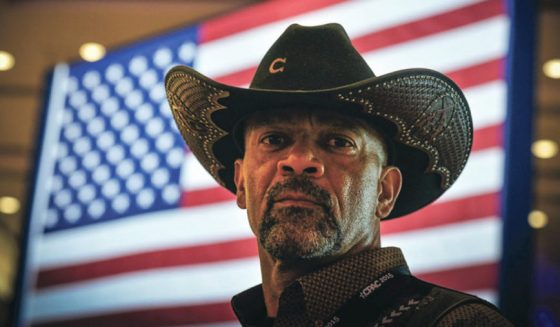
David Clarke
The Black Lives Matter movement “…doesn’t care any more about the lives of black people than the Ku Klux Klan…” Sheriff David Clarke asserted during an interview with Accuracy in Media. Clarke is the Sheriff of Miwaukee County, Wisconsin.
“Black Lives Matter, which I have renamed ‘Black Lies’ L-I-E-S Matter, it’s nothing more than an astroturf operation, it’s just the latest shallow disguised, confederation if you will, of community organizers and leftists that specialize in fostering disorganization and rebellion in ghettos and other struggling areas throughout the United States of America.”
Sheriff Clarke cited “a study done by Dr. Timothy Johnson of Toledo University…” that invalidates the widespread claim that police officers practice racial discrimination. He said the study found that twice as many white men “…are killed in police use of force situations” than black men.
“There is no research, there is not one bit of research or data that supports their lie—which is why I call them ‘Black Lies’—their lie about police use of force in the United States of America.”
Sheriff Clarke calls Black Lives Matter a “hate group,” saying, “These are nothing more than riot makers and they stoke up bitterness and resentment in people; and they use the police as a distraction from the staggering failure of liberal politicians in these large urban areas where these ghettos are contained.”
Comparing Chicago’s crime-ridden culture of death to “… some war-torn, sub-Sahara African nation that’s constantly under civil war with a tribal mentality,” Sheriff Clarke confronted the movement’s passivity on this issue.
“Where is Black Lies Matter? If they cared about the lives of black people they would be marching against the liberal establishment in these large urban areas and demanding a better quality of life and a better way of life. But no, that’s not what they’re doing. They’re instead using the police as a straw man…”
Describing Black Lives Matter as a “…political construct that’s developed and really turned out to be a get-out-the-vote and voter registration drive for the Democrat party…” Sheriff Clarke noted that while the Democrat Party did not found the group, the party views it as an “…opportunity…to enrage and energize black people to come out and vote…”
When questioned about the movement’s chief aim, Sheriff Clarke stated that “Their ultimate goal is to try to extract from…government, things that they have not earned…political power, they’re looking for money…and they’re trying to do it by force, by threats, by rioting, and other, I think, tawdry tactics.”
In an unequivocal denunciation of the “Black ‘Lies’ Matter” movement, Sheriff Clarke declared, “…I don’t support anything that this fraudulent movement proposes.”

Turkey's Growing Influence over Islam in Austria


  • The Berlin-based expert on Turkey, Ralph Ghadban, warns that the Islam being preached in Turkish-controlled mosques in Europe is a "Sharia Islam with strong Turkish-nationalist overtones" that calls for a "strict separation from Western individualistic values."
  • In February 2016, the University of Vienna published study which found that Islamic kindergartens in the capital are dominated by "intellectual Salafists and political Islamists" who are contributing to the "theologically-motivated isolation" of Muslim pupils. The report calls into question claims by the IGGiÖ that anti-Western textbooks have been removed from Austrian schools.
  • Muslim students now outnumber Roman Catholic students at middle and secondary schools in Vienna, according to official statistics, which show that Muslim students are also on the verge of overtaking Catholics in Viennese elementary schools. The data confirms a massive demographic and religious shift in Austria, traditionally a Roman Catholic country.
The selection of an ethnic Turk to lead the Islamic Religious Community in Austria (Islamischen Glaubensgemeinschaft in Österreich, IGGiÖ), the primary representative of Muslims in the country, is being challenged by Muslim groups opposed to Turkey's growing influence over the practice of Islam in Austria.
Ibrahim Olgun, a 28-year-old Austrian-born Islamic theologian with ties to the Turkish state, was quietly named on June 19 to replace 62-yer-old Fuat Sanac, who stepped down after serving as IGGiÖ president for five years.
Sanac, also a Turk, was reviled by Turkish authorities for helping the Austrian government draft a new Islam Law (Islamgesetz) that aims to promote an "Islam with an Austrian character." The law, which was promulgated in February 2015, seeks to reduce outside meddling by prohibiting foreign funding for mosques, imams and Muslim organizations in Austria. It also stresses that Austrian law must take precedence over Islamic Sharia law for Muslims living in the country.
Observers worry that Olgun — a member of the Turkey-financed Turkish-Islamic Union for Cultural and Social Cooperation in Austria (ATIB), an influential group that has vowed to challenge the Islam Law at Austria's Constitutional Court — will use his new position both to undermine the Islam Law and to increase further Turkey's influence over Muslims in Austria.
At least eight Austrian Muslim groups (representing Albanian, Arab, Bosnian and Sufi Muslims) are challenging Olgun, who was selected by the IGGiÖ's Shura Council (Schurarat), a rules committee (Shura is an Arabic word for consultation) whose five members all happen to be ethnic Turks.
IGGiÖ statutes require a person to be at least 35 years old to head the group, but the Shura Council secretly annulled that stipulation last December, according to Hassan Mousa, head of the Arab Religious Community in Austria (Arabischen Kultusgemeinde in Österreich). He said that Olgun's selection was "undemocratic" and "illegal" and added that his ties to ATIB would shift IGGiÖ's balance of power further in Turkey's direction.
ATIB, an umbrella group that operates more than 60 mosques in Austria, is directly managed by the religious affairs attaché at the Turkish embassy in Vienna, and the imams of these mosques are Turkish civil servants. ATIB and its German counterpart, the Turkish-Islamic Union for Religious Affairs (DITIB), are financed by the Turkish government's Directorate for Religious Affairs, known in Turkish as Diyanet.
According to the Berlin-based expert on Turkey, Ralph Ghadban, the primary mission of ATIB and DITIB is to "install the Turkish government's official version of Islam" in Austria and Germany. He says the two groups are the "extended arms" of Turkish President Recep Tayyip Erdogan, who uses them to promote Turkish nationalism as an antidote to integration among the Turkish diaspora.
Ghadban warns that the Islam being preached in Turkish-controlled mosques in Europe is a "Sharia Islam with strong Turkish-nationalist overtones" that calls for a "strict separation from Western individualistic values." He also says that DITIB has been strengthening its ties to Milli Görüs (Turkish for "National Vision"), an influential Islamist movement strongly opposed to Muslim integration into European society.
Olgun, who studied Islamic theology at the University of Ankara, has vowed to represent all Muslims in Turkey:
"I myself have experienced what it is like to grow up in Austria and to question my own identity. What is religion and what is tradition? It is worthwhile to reflect on it and then do theological research. Today I feel at home as a Muslim in Austria, but I also do not forget my roots. Therefore I will build bridges."
Olgun insists that he will not be Erdogan's puppet and will not allow himself to be influenced by ATIB. Until recently, however, Olgun was ATIB's point man for "interreligious dialogue," a key method of spreading Islam in the West by portraying it as a religion of peace and tolerance.
In Austria, ATIB directly competes with the Vienna-based, Saudi-funded King Abdullah bin Abdulaziz International Centre for Interreligious and Intercultural Dialogue, which, according to critics, is a permanent "propaganda center" in central Europe from which to spread the conservative Wahhabi sect of Islam.
Olgun also was an "inspector for Islamic religious instruction" (Fachinspektor für islamischen Religionsunterricht) for the IGGiÖ in Vienna, where he worked to ensure that Muslim children are being taught a version of Islam that presumably complies with standards established by the Turkish government.
The selection of 28-year-old Ibrahim Olgun (left) as the new leader of the Islamic Religious Community in Austria has been criticized by other local Muslim leaders as "undemocratic" and "illegal." They believe Olgun will work to increase Turkey's influence over Muslims in Austria. At right, the Saudi-funded King Abdullah bin Abdulaziz International Centre for Interreligious and Intercultural Dialogue in Vienna, which critics say spreads fundamentalist Wahhabi Islam.

The IGGiÖ, which represents more than 250 Muslim associations across Austria, supplies state-funded Islamic religious education at Austrian public and private schools.
In 2014, the IGGiÖ introduced new taxpayer-funded textbooks for the formal teaching of Islam in all public elementary schools across the country. According to the IGGiÖ, the new textbooks — called "Islam Hour" (Islamstunde) — are based on "secure and recognized sources of Islam" aimed at "embedding Islam into the lives of students."
Unlike previous versions of the books, which were criticized for being "overly martial in tone" and for not being "sufficiently oriented toward European values," the new books have been developed based a "completely new didactic model for competency-based education."
In February 2016, however, the University of Vienna published study which found that Islamic kindergartens in the capital are dominated by "intellectual Salafists and political Islamists" who are contributing to the "theologically-motivated isolation" of Muslim pupils. The report calls into question claims by the IGGiÖ that anti-Western textbooks have been removed from Austrian schools: "In many of their publications the Muslim Brotherhood and Milli Görüs reject the Western way of life as an inferior worldview."
Olgun rejects the criticism levelled against him: "They say that I am too young, that I am the extended arm of the Turkish state. That is not true. I was born in Austria. I grew up here and am an Austrian citizen. I am not a Turkish civil servant."
Olgun's supporters say it is time for a "generational change" at the IGGiÖ because Austria's Muslim community is young and growing fast. The Muslim population in Austria now exceeds 500,000 (or roughly 6% of the total population), up from an estimated 150,000 (or 2%) in 1990. The Muslim population is expected to reach 800,000 (or 9.5%) by 2030, according to recent estimates.
Muslim students now outnumber Roman Catholic students at middle and secondary schools in Vienna, according to official statistics, which show that Muslim students are also on the verge of overtaking Catholics in Viennese elementary schools. The data confirms a massive demographic and religious shift in Austria, traditionally a Roman Catholic country.
Soeren Kern is a Senior Fellow at the New York-based Gatestone Institute. He is also Senior Fellow for European Politics at the Madrid-based Grupo de Estudios Estratégicos / Strategic Studies Group. Follow him on Facebook and on Twitter. His first book, Global Fire, will be out in 2016.

Sybaritic West Surrenders to Islamists

  • The West should be proud of what the Islamists call "decadence." For the West, "decadence" is synonymous with freedom. The problem is that we, postmodern Westerners, have sacrificed the very values that ensure our survival, and have exchanged them for "decadence."
  • The problem is that the West does not desire life. The West is ready to surrender its love of life to those who want to take it away from them.
  • "Islam manifests what Nietzsche called 'great health': there are young soldiers ready to die for it. What are the values of our civilization? Supermarket and e-commerce, trivial consumerism and egotistical narcissism, vulgar hedonism or scooters for adults?" — Michel Onfray, French philosopher,
  • In the Netherlands, the minister of education decided to impose the teaching of LGBT courses in migrant centers. Germany has published guidelines, leaflets and cartoons to communicate to immigrants the new sexual norms to follow. Is that all we have to offer to these people?
Omar Mateen did not choose the Pulse gay nightclub because it had few security guards or because it was an easy target. He could have targeted a supermarket or a school. No, Mateen chose Pulse because it is a nightclub, where he slaughtered 49 "infidels" and wounded 53 more.
Before murdering 2,977 people, the leader of the 9/11 terrorists, Mohammed Atta, along with four of the other hijackers, made several trips to Las Vegas during the summer before the attack, where they were entertained by dancers in nightclubs.
Fifteen years later, there was another country, another jihadist cell, another nightclub. Salah Abdeslam was dancing in a nightclub in Brussels with his brother, Brahim, and flirting with a blonde woman. A few months later, Brahim blew himself up in Paris at a concert in the Bataclan Theater. Nightclubs haunt the Islamist imagination with their mix of alcohol, sexual promiscuity, drugs and music. ISIS labelled Paris "the capital of prostitution and obscenity."
The London nightclub Tiger Tiger, located between Piccadilly Circus and Leicester Square, was the target of a terror plot in 2007. Last February, the French intelligence service foiled a plot to attack swingers' clubs in Paris. Places such as Les Chandelles, which boasts a "fascinating journey into the heart of sensuality," or the Overside, which offers 250 square meters "dedicated to pleasure."
The most spectacular and bloody of these attacks at nightclubs took place in Bali, Indonesia, in 2002: 190 victims, mostly Western tourists, Australian surfers and girls in bikinis.
In 2008, Islamists attacked the Marriott Hotel in Islamabad, Pakistan, which they used to call "the den of Western decadence." Like the nightclubs, the hotels are ideological targets, places where men and women freely mix and guests can consume alcohol and enjoy music.
In July 2005, at least 88 people were killed by terrorists storming Sharm el Sheikh, the tiny Egyptian seaside village transformed by Hosni Mubarak into a global attraction for foreign tourism. In 2015, ISIS butchered British tourists on a beach in Sousse, Tunisia.
"We desire death more than you desire life," these Islamist terrorists have been telling us for the last twenty years. It seems they want to achieve a catharsis by spilling blood in our comfortable promiscuity, in the dark of a nightclub.
Mohammed Atta (left) leader of the 9/11 terrorists, along with four of the other hijackers, were entertained by dancers in Las Vegas nightclubs several times during the summer of 2001. Omar Mateen (right) deliberately chose to attack the Pulse gay nightclub, where he slaughtered 49 "infidels." Many Islamist terrorist attacks around the world have seemingly aimed to achieve a catharsis, by spilling blood in our comfortable promiscuity, in the dark of a nightclub.

Senior Hamas official Fathi Hamad, addressing Israel, has said the same thing. Major Nidal Malik Hasan wrote, "We love death more than you love life" before murdering 13 people at Fort Hood, Texas. "We are going to win, because they love life and we love death," said Hezbollah leader Hassan Nasrallah, along with Osama bin Laden and Ayatollah Ali Khamenei.
The West, however, should be proud of what the Islamists call "decadence." For the West, "decadence" is synonymous with freedom. The problem is that we postmodern Westerners have sacrificed the very values that ensure our survival and exchanged them for "decadence" -- pleasure. That is why Pim Fortuyn, the openly gay sociology professor and politician murdered in 2002, scorned Islam as a "backward culture" (an animal rights activist killed Fortuyn "to protect Muslims"). Fortuyn fought on behalf of what Islamists would consider "decadence," and he regarded permissiveness as the great glory of Western civilization.
The problem is that the West does not desire life. It seems tired of it. You can see that from the post-Orlando reactions which cannot even mention the word "Islam." The West is ready to surrender its love of life to those who want to take it away from them. To quote the French atheist philosopher, Michel Onfray:
"Islam manifests what Nietzsche called 'great health': there are young soldiers ready to die for it. What are the values of our civilization? Supermarket and e-commerce, trivial consumerism and egotistical narcissism, vulgar hedonism or scooters for adults?"
Pleasure has become sad in the West.
In a fever of moralistic prudery, Italy recently veiled naked art at the Capitoline Museums in Rome during the visit of Iranian President Hassan Rouhani. But we obligate other Muslims who arrive in Europe to see far more explicit naked images.
From Norway to Denmark, the Scandinavian nations have adopted compulsory sex education for migrants. In the Netherlands, the minister of education decided to impose the teaching of LGBT courses in migrant centers. Germany has published guidelines, leaflets and cartoons to communicate to immigrants the new sexual norms to follow. Is that all we have to offer to these people?
"The morally illiterate leaflets European local authorities are distributing to migrants reflect the problems that official EU culture has in the realm of values," wrote sociologist Frank Furedi. Europe already tried to integrate Muslims by offering them wantonness and libertinism. And it failed. Asked what drove them to convert to Islam, many Europeans talked of feeling their lives had been lost and lacking in purpose, citing "lack of morality and sexual permissiveness".
The "clash of civilizations" has turned into a war between those who cry, "We will not give up our lifestyle" and those who sing, "We desire death more than you desire life." It is a war between a decadent apathy with moral inertia and Islamist theological turmoil. The Caliphate is much stronger than our disarmed and self-righteous decadence.
ISIS's black banner, crying "No God but Allah" -- the banner of the people who kill cartoonists in Paris and gays in Orlando -- is marching over the ruins of our addiction to pleasure.